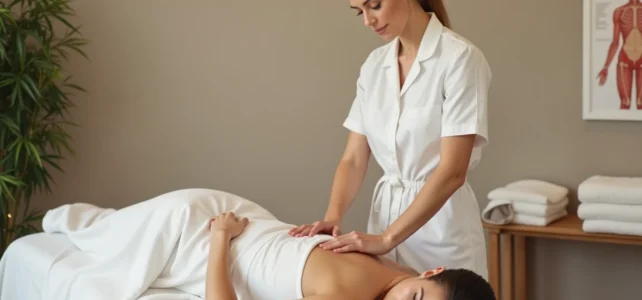
Massage mobilizes tissues whose mechanical tolerance varies according to depth, vascularization, and proximity to nerve structures. Knowing the areas to avoid during a massage is not just common sense: it is an anatomical skill that ensures the safety of each session, whether working in an office, spa, or at home.
Anatomy of the anterior neck: why this area has the highest risks
The anterior triangle of the neck houses the carotid artery, the internal jugular vein, the vagus nerve, and the trachea. Any direct pressure on the anterior neck can compress the carotid and cause a vagal discomfort, or even a stroke in fragile conditions. We recommend working only on the posterior and lateral muscles of the neck, upper trapezius and splenius, while systematically avoiding the front side.
The upper part of the cervical spine (C1-C2) presents a distinct problem. The atlas and axis facilitate head rotation; applying strong manipulation at this level, especially with a massage gun, risks irritating the vertebral artery that runs through the transverse foramina. In this area, mechanical percussion should be strictly avoided.
A practitioner wishing to delve deeper into the areas to avoid during a massage will find additional references on cervical vascular and nerve structures.
Bone and tendon areas: the mechanical limits of massage
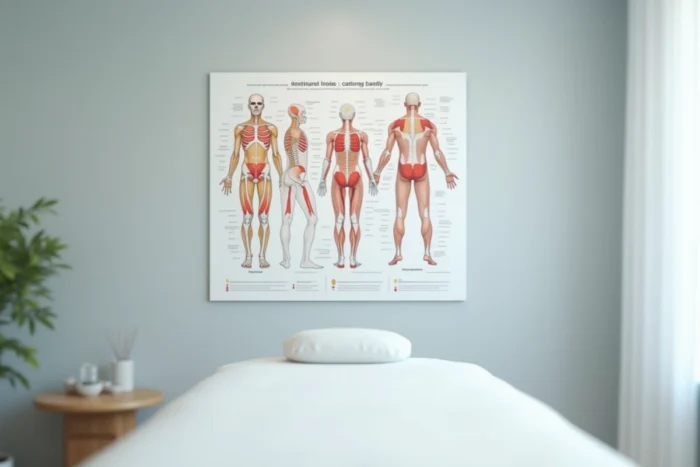
Bone prominences are not just palpable landmarks. Patella, tibial crest, elbow epicondyles, spinal spinous processes: these structures have neither a protective muscle layer nor absorption capacity. Massaging directly on the bone exposes the periosteum, a richly innervated membrane whose irritation causes sharp pain and sometimes local inflammation.
Tendon insertion areas deserve the same caution. The Achilles tendon, the iliotibial band at the knee, the rotator cuff tendons on the humeral head: these junction points between muscle and bone poorly tolerate repeated deep friction. An overly aggressive technique in this area can trigger reactive tendinopathy.
Intervertebral discs and lumbar spine
The spine is not a homogeneous muscle rail. Intervertebral discs, fibro-cartilaginous structures located between each vertebra, should never receive direct pressure. We observe that many beginner practitioners press along the spinous processes thinking they are working the paravertebrals, while they are compressing the discs. Correct paravertebral work is done laterally, on the erector spinae muscle masses, never on the midline.
Localized skin contraindications often underestimated
Beyond general pathologies (thrombosis, fever, acute infection), certain localized skin conditions necessitate a temporary exclusion of the affected area:
- Recent tattoos (less than two weeks) present healing skin with a weakened epidermis. Any friction risks altering the pigment and promoting an infection.
- Unhealed piercings constitute a bacterial entry point. Massaging around a fresh piercing can cause partial tearing or inflammation.
- Active eczema, rosacea, sunburn: these inflammatory states render the skin hypersensitive. The application of massage oil combined with mechanical friction exacerbates the reaction.
- Open wounds and active herpes are absolute contraindications in the affected area, with a risk of infectious dissemination.
We recommend a systematic visual inspection of the skin before each session. Any non-healed skin lesion excludes the area from the protocol, even if the client minimizes the discomfort.

Massage gun: forbidden zones and specific precautions
Mechanical percussions amplify the risks associated with vulnerable areas. A massage gun delivers high frequencies on a small surface, concentrating mechanical energy. Several areas require strict exclusion from this tool:
- The anterior neck and the upper part of the cervical spine, for the vascular reasons detailed above.
- The eyes and the orbital region, where tissues are extremely thin and ocular structures fragile.
- The intimate parts and breasts, sensitive areas where percussion has no therapeutic indication.
- Bone prominences without muscle coverage (ankle, knee, elbow, skull).
The massage gun is designed for large muscle masses: quadriceps, hamstrings, glutes, calves, trapezius. Outside of these groups, the benefit-risk ratio becomes unfavorable. A common mistake is to increase intensity on a tense area: the perceived tension often comes from a trigger point that responds better to moderate static pressure than to intense percussion.
Absolute and relative contraindications: adapting the massage to the patient’s condition
The distinction between absolute and relative contraindications changes the course of action. Deep vein thrombosis, acute fever, or systemic infection necessitate complete cancellation of the session. The risk of mobilizing a thrombus or disseminating a pathogen through circulatory stimulation is too high.
Relative contraindications require an adjustment of the protocol rather than a refusal. Pregnancy, for example, does not prohibit massage but excludes certain areas (abdomen, lower back) and certain techniques (deep pressure, percussion). Diabetes with peripheral neuropathy reduces sensitivity in the extremities: the client does not perceive pain that would normally signal excessive pressure.
A history of cancer requires verifying the absence of ongoing treatment and adapting pressure on areas that have undergone surgery or radiotherapy. In all doubtful cases, we refer to a medical opinion before starting the protocol.
The mapping of areas not to be massaged evolves with anatomical knowledge and clinical feedback. A practitioner who masters these exclusions protects their client, their practice, and their professional responsibility.