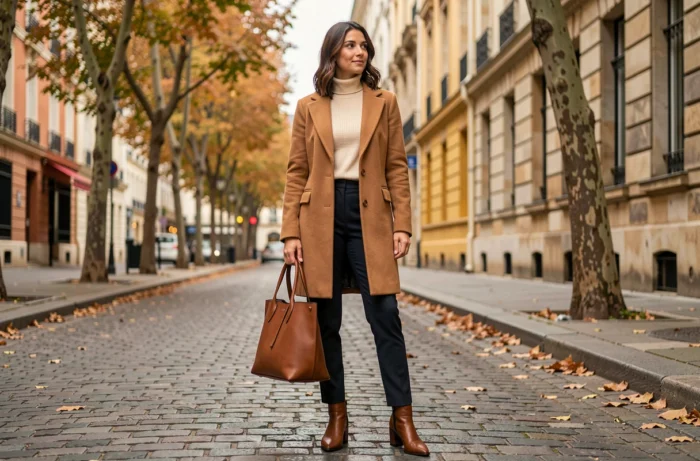
When you open your wardrobe in September, the observation is often the same: half of the pieces bought last year no longer match anything. Not because they are worn out, but because they were chosen without a guiding thread. The autumn-winter 2026 fashion trends impose a more radical sorting, driven by new regulatory constraints and a return to clothes that we keep for several seasons.
Textile traceability and digital passport: what changes in our purchases this season
Since July 2026, the French law known as the anti-fast-fashion law regulates the advertising of very low-cost brands, restricts the use of influencers to promote these products, and mandates the display of the place of manufacture. At the same time, the European Union has banned the destruction of unsold textiles for large companies, a measure that came into effect on July 19, 2026, as part of the ESPR.
In practical terms, some labels now feature a digital product passport that provides exact composition, origin of materials, and end-of-life conditions for the garment. This system, still being rolled out, pushes brands towards greater traceability.
For us, as consumers, this means we can now check if a pair of jeans labeled “made in Europe” truly is, or if the mention only refers to the final assembly. Before adopting a trendy piece, checking the label becomes as useful a reflex as trying on the fit. Detailed analyses on these topics can be found in fashion articles on Pingoo, which intersect style and sustainability.

Colors for autumn-winter 2026: burgundy, chocolate, and ecru for everyday wear
The season’s runways have confirmed a narrowed palette. Burgundy dominates, followed by chocolate and ecru. This is something to celebrate: these three colors combine effortlessly, simplifying the construction of outfits for everyday wear.
How to wear burgundy without falling into a total look
The classic pitfall is buying a burgundy pair of pants, a sweater, and a coat in the same week. The result resembles a uniform. Instead, prioritize a single strong piece in this shade, such as a structured blazer, paired with raw jeans or ecru pants.
Chocolate works in the same way: a thick knit or a midi skirt is enough. The rest of the look benefits from remaining neutral. Ecru serves as a binding element. An ecru top under a burgundy blazer with straight jeans creates a complete outfit without needing to think for twenty minutes in front of the mirror.
Kaki: a safe bet or a false good idea
Several brands are promoting kaki as the “new neutral” this season. Reactions vary on this point: this color pairs well with warm complexions but can wash out lighter skin tones. Before investing, try on a kaki top in-store under natural lighting, not under the store’s fluorescent lights.
Fashion pieces to adopt: blazer, knitwear, and straight jeans
Rather than listing ten garments, let’s focus on three pieces that truly structure an autumn-winter wardrobe and that will remain stylish come January.
- The slightly oversized blazer: worn over a dress, jeans, or fluid pants, it elevates any base. Choose it in a fabric dense enough not to wrinkle in a bag.
- The ribbed knit sweater: more interesting than a basic crew neck sweater, the ribbing adds texture without overwhelming. In ecru or burgundy, it becomes the pivot of the wardrobe.
- The mid-rise straight jeans: after several seasons of wide cuts, straight jeans return as a compromise between slim (which many have abandoned) and wide leg (not suitable for all body types).
These three pieces can be recombined with each other and with the existing wardrobe. This is the most reliable criterion for judging a purchase: does this piece work with at least three outfits already in my closet?

Adapting trends to your body shape: practical advice
Style guides often talk about body shapes in letters (A, H, V, O). In practice, this vocabulary is of little help when you’re in a fitting room. Two more concrete markers work better.
The first: observe where the shoulder seam falls. If it drops below the joint, the piece is oversized. This is intentional on a blazer, less so on a coat where excess fabric can weigh down the silhouette. The second: check the length of a skirt or coat in relation to the knee. A midi skirt that stops at the calf flatters most silhouettes, while a cut that hits the lower third of the calf visually shortens the leg.
For fluid pants, very present this season, the rise makes all the difference. A high waist defines the silhouette, while a mid-rise relaxes it. Choose based on what you wear over it: a tucked-in top calls for a high waist, while a sweater worn over it pairs better with a standard rise.
Maintaining your clothes to avoid unnecessary purchases
With the European ban on the destruction of unsold goods and the separate collection of used textiles being implemented, the lifespan of garments becomes a collective issue, not just a matter of personal budget.
Some simple gestures can significantly extend the life of seasonal pieces:
- Wash knits in cold water, inside out, in a mesh bag. A ribbed knit sweater washed at 40° loses its shape in just a few cycles.
- Hang blazers on wide hangers, never on thin metal hangers that distort the shoulders.
- Spot clean jeans instead of washing them entirely. The less you wash a pair of jeans, the better their color and fiber hold up.
These habits are not about militant minimalism. They simply allow you to wear the trendy pieces of this season next autumn without them looking worn out. A well-maintained burgundy blazer remains relevant for several years, whereas a blazer washed without care can lose its shape in just a few months.
Ultimately, the autumn-winter 2026 fashion trends boil down to a simple trade-off: fewer pieces, better chosen, better maintained. The regulatory framework pushes in this direction, and the wardrobe gains in coherence.


