
The French vaccination schedule has been updated for the 2026-2027 season, epidemiological surveillance is becoming more precise across several continents, and the prevention of certain infectious diseases is gradually moving beyond individual recommendations to become a community matter. These developments are concretely changing the way the general public can protect themselves, beyond general advice on lifestyle hygiene.
Respiratory Vaccines 2026-2027: Differentiated Recommendations by Profile
The vaccination guidelines for influenza, COVID-19, and RSV (respiratory syncytial virus) have become significantly clearer in recent months. Several American medical societies have published updated recommendations that no longer rely on a single message directed at the entire population. Recommendations now vary according to age, pregnancy, and the patient’s immune status.
This segmented approach changes the game for general practitioners, who now have a clearer framework to guide each consultation. An immunocompromised adult no longer receives the same vaccination schedule as a pregnant woman in her third trimester or an infant under six months old. Following the health news on En Pleine Santé allows for spotting these updates as soon as they are published, without waiting for the next medical appointment.
RSV, long considered a pediatric risk, is now the subject of recommendations extended to older adults. This shift reflects an awareness: serious respiratory infections do not only affect one age group.

Epidemiological Surveillance: What Has Changed in Africa and Europe
WHO Africa reported a marked improvement in the completeness of integrated disease surveillance in 2025, with a net gain compared to the previous year. This means that more countries on the continent are submitting their health data on time, which enhances the capacity for early detection of outbreaks.
This progress has direct repercussions on the management of global health alerts. When an infectious outbreak is identified more quickly in the Central African Republic or the Democratic Republic of the Congo, local containment measures can be triggered before the virus spreads to neighboring countries and then to international flight connections.
The Ebola Bundibugyo Case in the DRC
In August 2026, WHO convened the emergency committee of the International Health Regulations (IHR) to assess the Ebola Bundibugyo outbreak in the Democratic Republic of the Congo. Temporary recommendations were issued, indicating that the situation warranted enhanced coordination among member states.
This type of rapid response would have been more difficult to organize without recent advancements in surveillance. However, field reports differ on the actual capacity of certain rural areas to maintain this level of data reporting over time, due to a lack of stable infrastructure.
Measles: The Return of a Disease Thought to Be Under Control
Measles is experiencing a resurgence in countries where vaccination coverage has declined. In Bangladesh, nearly a thousand children have died from the disease, a toll that highlights the speed at which this virus spreads in inadequately protected populations.
The phenomenon is not limited to developing countries. Several European countries have reported localized outbreaks in recent years, often in communities where vaccination rates have fallen below the herd immunity threshold. Measles resurfaces where vaccination coverage drops below the critical threshold.
The available data does not allow for a conclusion of a uniform anti-vaccine movement. The reasons for the decline in vaccination vary by region:
- Difficulties accessing vaccination centers in rural or isolated areas, where the distance to the nearest healthcare facility can sometimes exceed several hours of travel
- Mistrust related to contradictory information circulating on social media, without an official channel managing to restore local trust
- Supply disruptions in vaccines in certain middle-income countries, exacerbated by post-pandemic logistical tensions
Territorial Tick Prevention: When Public Health Goes Local
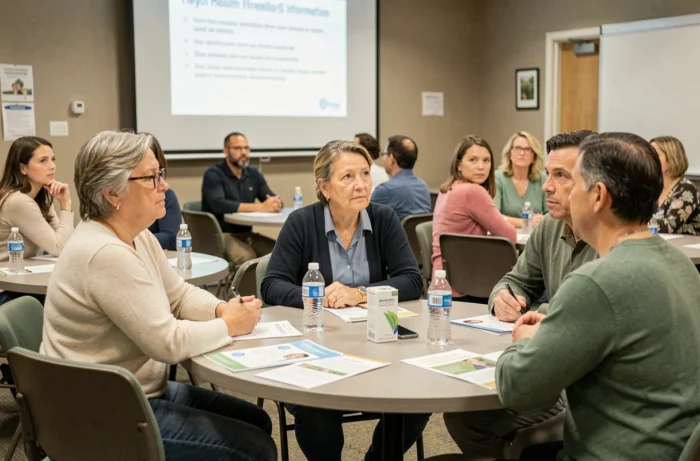
British authorities have asked local communities to disseminate seasonal prevention messages against tick bites in at-risk areas. This shift deserves attention: prevention is moving from individual advice to a territorial public health logic.
Until now, protection against ticks (and the diseases they transmit, notably Lyme disease) relied mainly on personal recommendations: wearing long clothing, using repellent, inspecting skin after a walk in the woods. The territorial approach adds a collective layer: information signs in parks, seasonal alerts relayed by town halls, awareness-raising in schools located on the edge of wooded areas.
A Model Transferable to Other Local Health Risks
This type of initiative could inspire other targeted prevention policies. France already has alert systems for heatwave episodes or air quality. Applying the same logic to vector risks (tiger mosquito, ticks) in the most exposed departments would be a coherent extension of the model.
Field feedback on the effectiveness of these local campaigns remains limited at this stage. Measuring the actual impact of an information sign on the behavior of walkers requires monitoring over several seasons, and data of this type is rarely published.
Trust in the Health System: An Indicator to Watch
In the United States, a survey published in 2026 shows that Americans’ trust in local caregivers remains high, but it has declined towards certain public health institutions. This gap between the trust given to the primary care physician and that given to central agencies complicates the dissemination of prevention messages.
In France, the dynamics are comparable but not identical. The High Authority of Health (HAS) regularly publishes opinions and recommendations, but their adoption by the general public largely depends on the relay provided by healthcare professionals on a daily basis.
- A vaccination message relayed by the primary care physician during a consultation has more impact than a national campaign broadcast solely online
- Pharmacists play an increasing role in vaccination and screening, bringing the prevention message closer to patients’ living environments
- Epidemiological surveillance data, even reliable, only change behaviors if they are translated into understandable and accessible recommendations
Health protection in 2026 relies less on new spectacular discoveries than on the ability of health systems to apply what already exists, in the right place, at the right time, and for the right patient profile. It is in this gap between recommendation and its concrete implementation that the essence of prevention lies.


