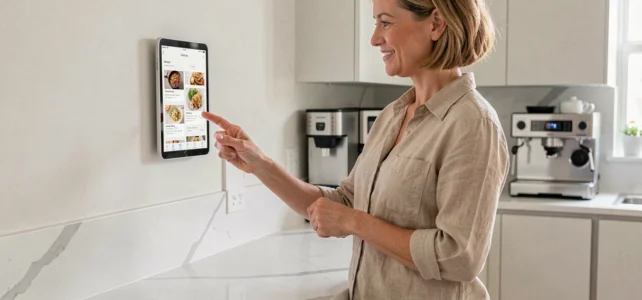
An oven that starts cooking while you’re still stuck in traffic, a refrigerator that alerts you to expired yogurt before the smell takes over: connected kitchens solve very tangible irritants. But between marketing promises and actual use, the gap remains significant. We sift through the features that truly change daily life and those that complicate more than they simplify.
Compatibility between connected devices: the real first obstacle
Before discussing AI-driven recipes, there is a down-to-earth problem that most guides overlook: interoperability between brands remains limited. An oven from one manufacturer, a hood from another, a cooktop from a third, and you end up with three distinct apps on your smartphone, each with its own protocol.
Field feedback shows that many users only utilize a portion of the connected functions, precisely because their devices do not communicate with each other. You buy a smart appliance, and you use it like a conventional device.
To mitigate this problem, you can choose a unified ecosystem from the start. Some brands offer a single app that controls the oven, dishwasher, and refrigerator. To compare the available ranges and see what a coherent ecosystem can offer, you can explore the TwimmCook website and identify the combinations that work together.
The Matter protocol, designed to standardize communication between connected home devices, is starting to be adopted by several appliance manufacturers. Checking Matter compatibility before a purchase prevents you from getting locked into a closed ecosystem.
Cooking app and software dependency: what the purchase price doesn’t tell you
A connected cooking robot without its app is just a conventional cooking robot sold at a higher price. This software dependency is an angle that product sheets almost never address.
When the manufacturer stops support
Recent feedback indicates that some devices lose functions when the app is no longer maintained. A smartphone update can render the app incompatible, and the manufacturer has no legal obligation to maintain it indefinitely.
In practical terms, this means that an oven purchased for its guided cooking programs may end up limited to its manual settings after a few years. The total cost of ownership thus exceeds the price displayed in stores: you must factor in the duration of software support into the equation.
What to check before buying
- The app’s update history: an app that hasn’t been updated in over a year is a red flag
- The ability to use the device in full manual mode, without a connection, to maintain basic functionality if the app disappears
- User reviews after two years of use, not just at unboxing, as this is when software limitations become apparent
Connected appliances and guided cooking: the features that truly make a difference
Once past the filter of compatibility and software longevity, some connected features provide measurable gains in daily life. We’re not talking about gadgets, but automations that save real time.
The connected oven with integrated temperature probe remains the most universally useful feature. You insert the probe into the meat, set the target temperature on your smartphone, and the oven stops by itself. No overcooking, no need to monitor.
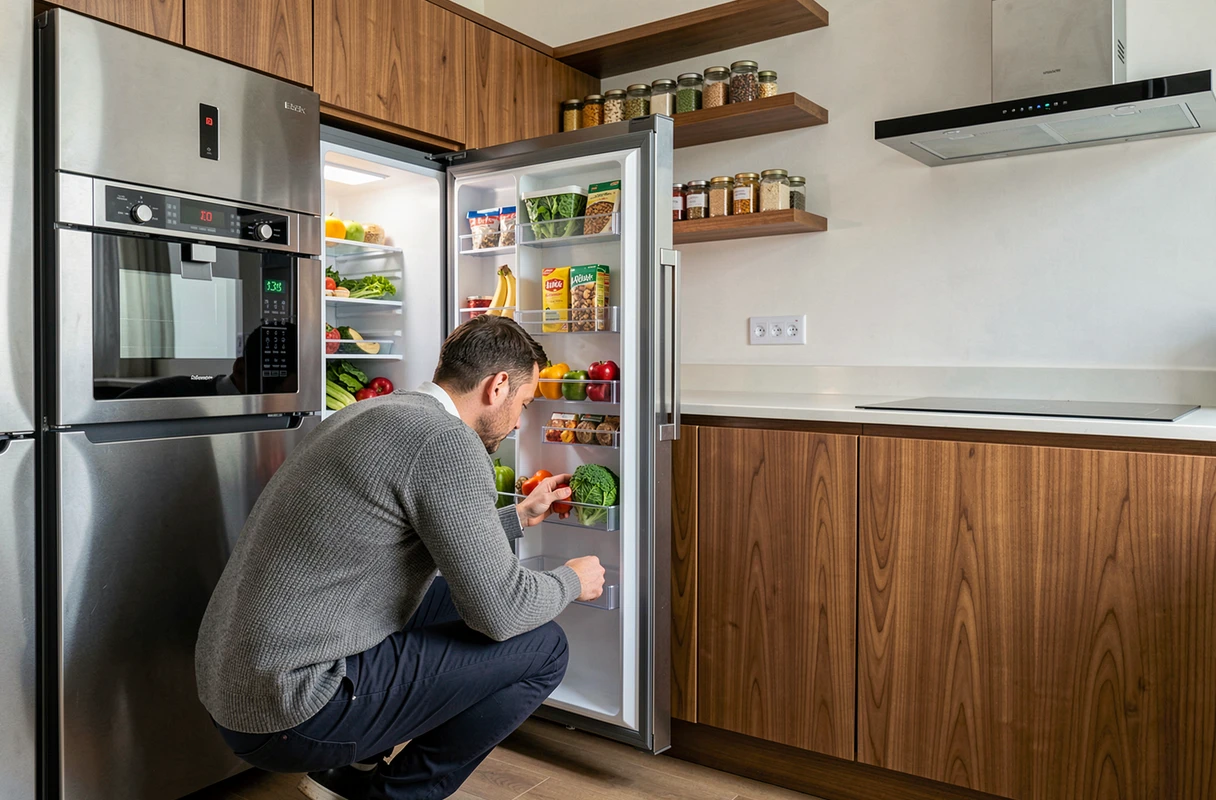
The refrigerator with an internal camera accessible via an app allows you to check your stock from the supermarket. It’s basic, but it prevents duplicate purchases. Feedback varies on this point: some users find the camera indispensable, while others abandon it after a few weeks.
The delayed programming of the dishwasher via the app allows you to start the cycle during off-peak hours without being physically in the kitchen. On a peak/off-peak electricity contract, the savings over a year are noticeable.
Personal data and smart cooking: what your devices transmit
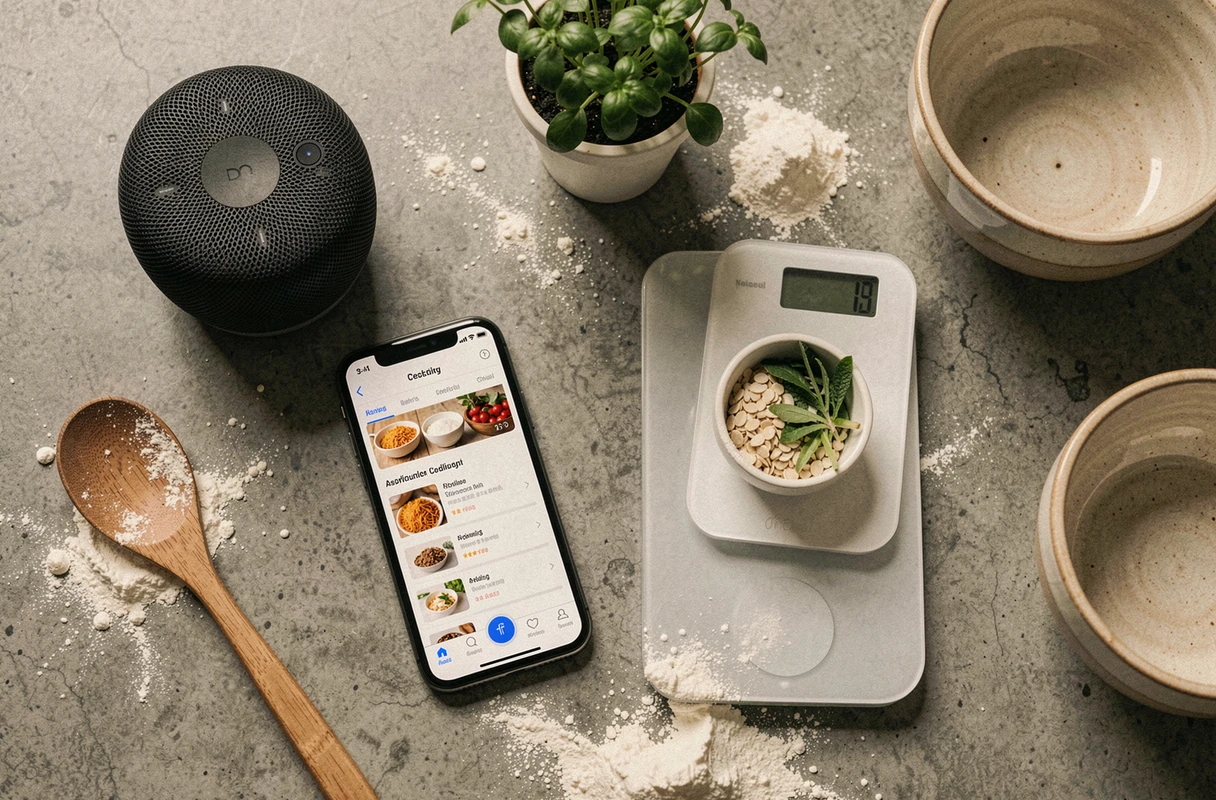
A connected scale that records your weights, a refrigerator that analyzes your eating habits, a cooking robot that stores your favorite recipes: these devices collect usage data that reveal a lot about your lifestyle.
Checking privacy settings upon first use is not paranoia. Some devices sync data by default with remote servers. You can usually disable this syncing in the app settings, but you must know that the option exists.
Some concrete reflexes to adopt:
- Create a dedicated account (with a secondary email address) for connected kitchen devices, separate from your personal accounts
- Disable data sharing with third parties in the settings of each app
- Check whether the data is stored locally or if it is always transmitted through the manufacturer’s cloud
Home automation in the kitchen brings real comfort as long as you maintain control over what you share. A device that operates without mandatory account registration offers more flexibility than one that requires sign-up to start.
Connected kitchen: should you equip everything at once?
The temptation for a complete overhaul exists, but the most reliable approach is to start with one or two connected devices within the same ecosystem, and then gradually expand. You test actual usage, verify that the app holds up over time, and then add more.
A connected oven and a cooking robot on the same platform already cover the majority of daily use cases: remote guided cooking, guided recipes, delayed programming. The rest, such as smart lighting or a hood synchronized with the cooktop, is more about comfort than necessity.
Connected appliances are advancing rapidly, but the equipment purchased today needs to last five to ten years. Betting on devices that remain fully functional without a connection is the only guarantee of not ending up with a silent oven when the Wi-Fi goes down.