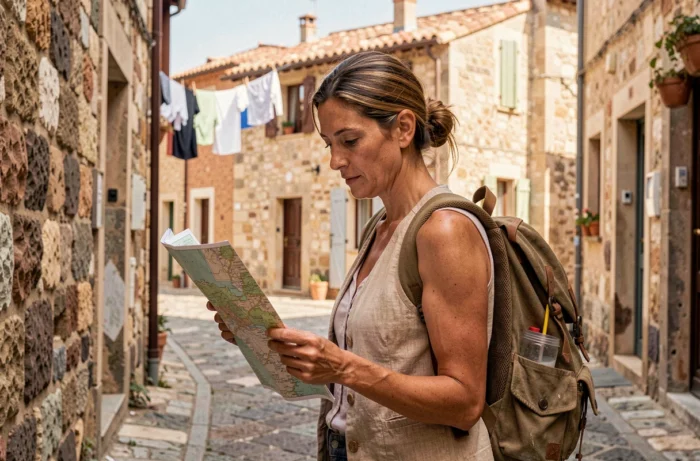
Going far away does not guarantee traveling differently. Every year, a majority of French people choose a domestic destination for their summer holidays, and this trend is accelerating. Proximity travel is no longer a fallback: it is becoming a legitimate way to explore the world, rethink itineraries, and experience things that classic tours do not offer.
Proximity travel in France: why the trend changes everything
Have you ever noticed how distant destinations lose their appeal when the journey takes longer than the stay? This discrepancy is prompting more and more travelers to reconsider what is right in front of them.
In France, about 71% of travelers prefer a domestic destination for the summer. This figure marks a cultural shift. Proximity is no longer a substitute; it is a conscious choice.
At the same time, package long-haul trips are experiencing a decline of about 20% in bookings. Searches for destinations in France are increasing, confirming a trend towards exploring within a reduced radius. A mountain range three hours away by car, an unknown coastline on the border of a neighboring region: these routes now make up the daily life of the curious traveler.
Platforms like 1001decouverte.com facilitate this approach by gathering ideas for stays rooted in local territories, far from standardized tours.
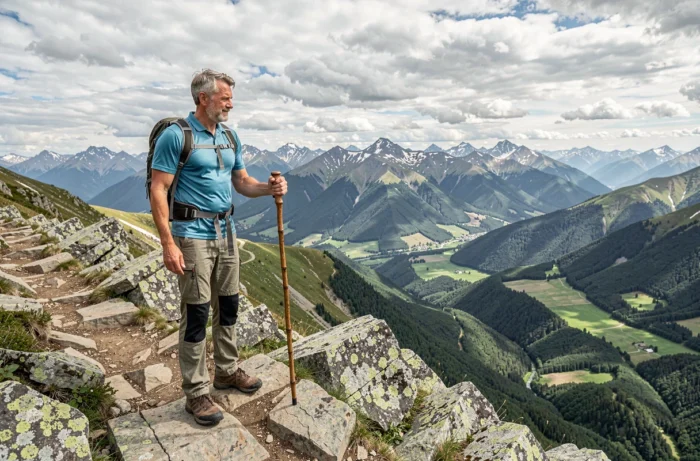
Nature destinations in Europe: three countries that change the game
When we think of “traveling differently,” Europe is often underestimated. A few countries offer landscapes and experiences that are mistakenly associated only with far-off continents.
Italy beyond tourist clichés
Italy is not just about Rome, Florence, or Venice. Apulia, Basilicata, or the Southern Dolomites offer preserved nature and a local life that is still little exposed to mass tourism. Hiking in Pollino National Park, for example, takes you through ancient forests without encountering crowds.
Northern Europe for immersion in nature
Norway, Sweden, and Finland provide ideal conditions for those seeking silence. Traveling in Northern Europe means embracing slowness: canoeing on a frozen lake, spending a night in a remote cabin, walking on trails where wildlife is the only company.
The Balkans for accessible change of scenery
Montenegro, Albania, or North Macedonia remain largely off the radar. The Tara River Canyon, Lake Ohrid, or the Albanian Riviera combine spectacular landscapes with a moderate cost of living. The change of scenery is total, less than three hours by plane from Paris.
Traveling differently: van, slow travel, and local experience
Exploring the world differently also involves the mode of transportation. The van and slow travel transform the journey into the destination.
- The van allows you to stop where no hotel exists, to sleep facing a landscape that no one has programmed in a catalog.
- Traveling by bike or on foot forces you to slow down. Every kilometer traveled at your own pace creates a sensory experience that a plane or air-conditioned bus cannot replicate.
- Stays with locals or on farms open the door to local daily life: shared cooking, seasonal work, spontaneous conversations.
The mode of transport greatly influences the quality of the experience much more than the destination itself. A road trip in a van in the Cévennes can create a more memorable experience than an all-inclusive stay in the Maldives.
European directive on greenwashing: what changes for travelers in 2026
Traveling differently also means knowing how to read the promises of operators. Starting September 27, 2026, the European directive 2024/825 prohibits unsubstantiated claims of “carbon-neutral travel” that are not backed by recognized scientific evidence.
In practical terms, a tour operator will no longer be able to advertise “carbon-compensated stay” without demonstrating the reality of that compensation. This regulation ends a vagueness that has lasted for years.
For travelers, this means looking beyond the label. A few concrete guidelines help to sort through:
- Check if the operator details emission sources (transport, accommodation, activities) rather than providing a global figure.
- Favor stays that reduce emissions at the source (sustainable transport, local accommodations) rather than those that compensate afterward.
- Beware of vague terms like “eco-friendly” or “green tourism” without measurable commitments.
Transparency becomes a selection criterion on par with price or destination.
Building a meaningful itinerary
A good itinerary does not line up destinations like boxes to check. It is based on an intention: to discover a region, to follow a river from its source to its mouth, to connect two mountain ranges on foot.
Proximity travel and slow travel share a common point: they place the journey at the center of the experience. The road between two villages, the pass crossed in the rain, the unexpected stop in a hamlet become the journey itself.
The majority of French people who choose to stay in France for their holidays do not give up adventure. They redefine it. A weekend camping in the Jura, a week of kayaking on the Dordogne, or a van tour of the Auvergne volcanoes create a break from daily life as clear as a transatlantic flight, with a much lighter footprint.


